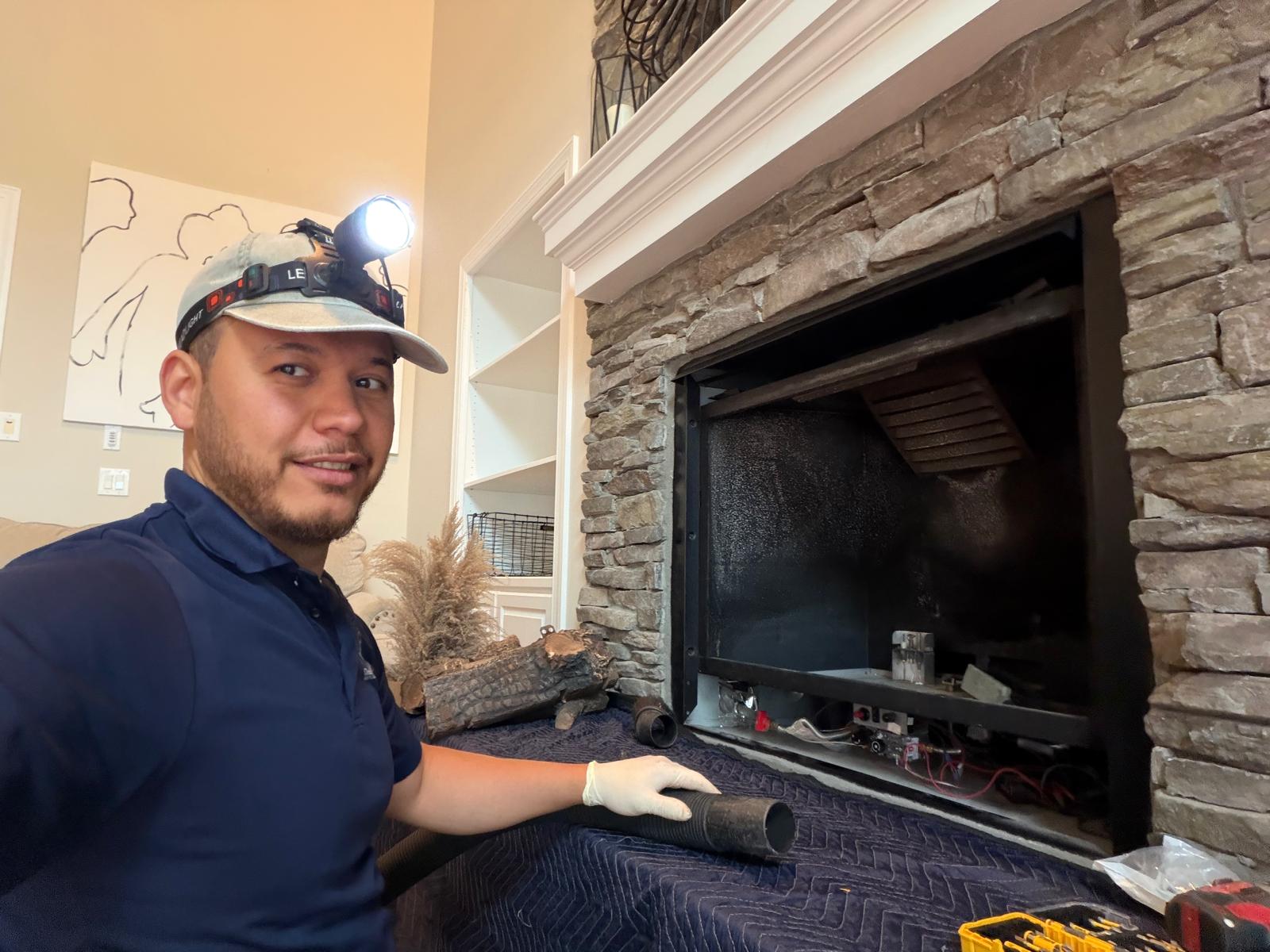
The pilot light is the small flame inside your gas fireplace that ignites the main burner when you turn the unit on. When the pilot light fails, the entire fireplace is out of commission. This guide walks you through the most common pilot light problems, what causes them, and when to call a professional.
Understanding Your Pilot Light System
Gas fireplaces use one of two pilot light systems:
- Standing pilot — a small flame that burns continuously, even when the fireplace is off. Common in older units and simpler models.
- Intermittent pilot (electronic ignition) — the pilot only lights when the fireplace is turned on, using an electronic spark. Common in newer, more efficient models.
Both systems can fail, but they fail in different ways. Here's how to troubleshoot each.
Standing Pilot Light Troubleshooting
Step 1: Check if the Pilot Is Out
Look through the glass panel at the bottom of the firebox. You should see a small blue flame near the burner. If there's no flame, the pilot is out.
Step 2: Attempt to Re-Light
- Turn the gas control knob to the "Off" position and wait 5 minutes for any residual gas to dissipate.
- Turn the knob to "Pilot."
- Press and hold the knob in (this manually opens the gas to the pilot).
- While holding the knob, press the igniter button repeatedly until you see a spark and the pilot lights.
- Continue holding the knob for 30-60 seconds after the pilot lights. This heats the thermocouple.
- Release the knob slowly. If the pilot stays lit, turn the knob to "On."
Step 3: Diagnose Common Failures
If the pilot won't stay lit after releasing the knob:
- Thermocouple failure — the most common cause. The thermocouple isn't generating enough voltage to keep the gas valve open. Replacement is needed.
- Dirty pilot orifice — dust and debris can restrict gas flow to the pilot, producing a weak flame that can't adequately heat the thermocouple.
- Thermocouple position — if the thermocouple has shifted and the pilot flame isn't directly contacting its tip, it won't generate enough heat signal.
If the pilot won't light at all:
- No gas supply — verify the shut-off valve is open.
- Failed igniter — the piezo igniter may no longer produce a spark. You can try lighting with a long fireplace match (only if your model allows it per the manual).
- Blocked pilot tube — the small tube that feeds gas to the pilot can become clogged. This requires professional cleaning.
Electronic Ignition Troubleshooting
For fireplaces with electronic (intermittent) pilot systems:
- Check power supply. Verify the unit has electricity — check the breaker and any inline power switches.
- Replace batteries. Many electronic systems have a battery backup. Replace batteries in the receiver and remote.
- Listen for clicks. When you activate the fireplace, listen for the clicking of the igniter. Clicking with no ignition means the spark is too weak or gas isn't reaching the pilot.
- Check the control module. Electronic ignition modules (like Heat & Glo's IntelliFire) can fail over time. This requires professional diagnosis and replacement.
Safety Warnings
- Never ignore a gas smell. If you smell gas at any point during troubleshooting, stop immediately, leave the house, and call your gas company.
- Don't force components. Gas control knobs and valves are precision instruments. Forcing them can cause internal damage or gas leaks.
- Know your limits. Relighting a pilot is generally safe for homeowners. Anything beyond that — replacing thermocouples, cleaning pilot assemblies, adjusting gas valves — should be done by a certified technician.
If your pilot light problems persist, schedule a repair with Capital Gas Fireplace Repair. We serve all of Northern Virginia including Vienna and offer same-week diagnostic appointments. Call (571) 570-2877.
Frequently Asked Questions
How much does it cost to fix a pilot light? Most pilot light repairs cost $150–$350 in Northern Virginia, depending on whether the thermocouple, pilot assembly, or igniter needs replacement. We provide a clear quote after diagnosis.
Is it normal for a pilot light to go out? Occasional pilot outages can happen (due to drafts or a brief gas supply interruption), but a pilot that repeatedly goes out indicates a failing thermocouple or dirty pilot assembly that needs professional attention.
Should I leave my gas fireplace pilot light on all summer? It's a matter of preference. Leaving it on prevents moisture buildup in the firebox and ensures easy startup in the fall. Turning it off saves a small amount of gas. Either approach is safe.