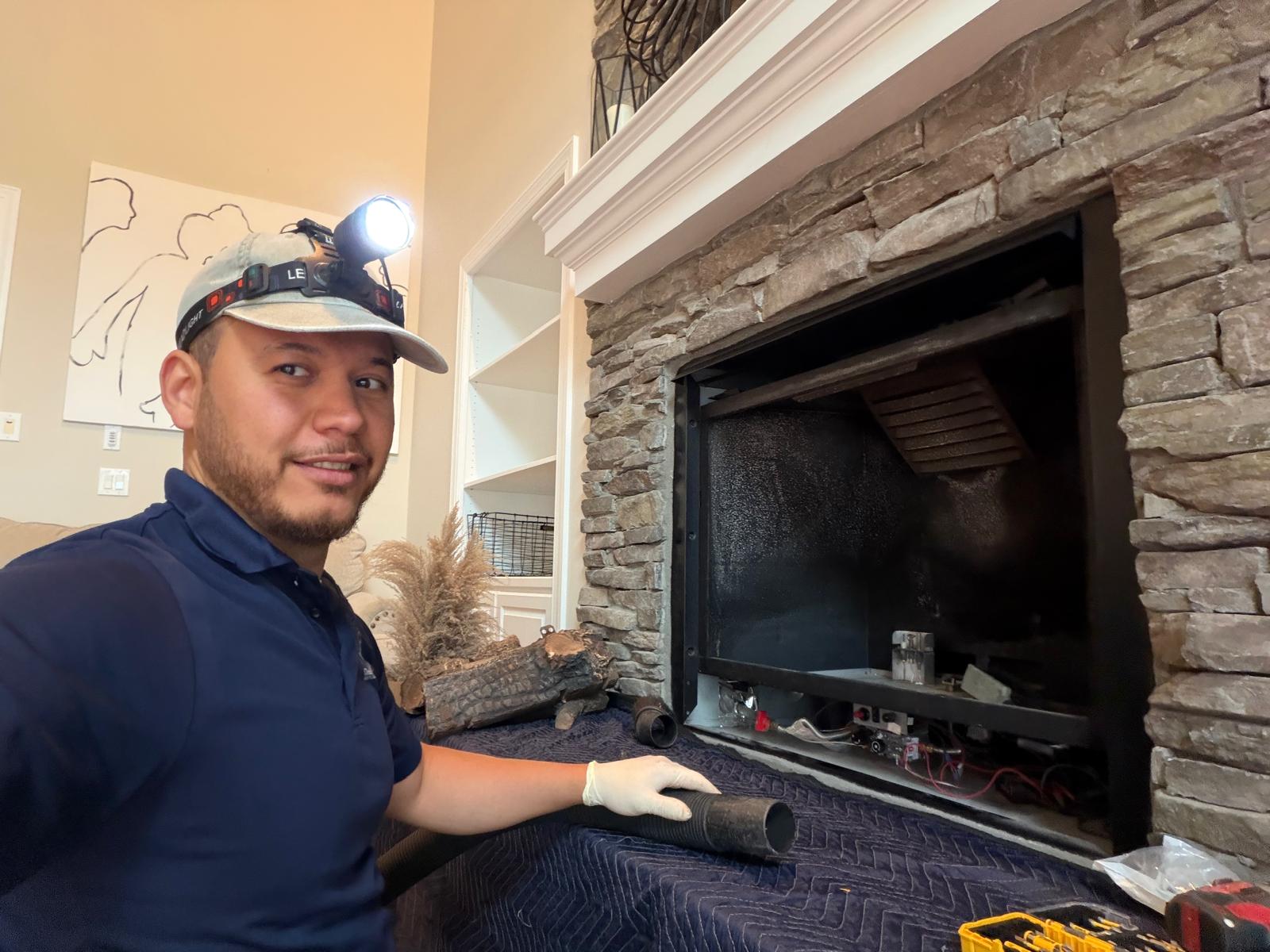
Gas fireplaces are among the safest heating appliances available when they're properly installed and maintained. But like any gas-powered device, they can develop issues that pose real safety risks if ignored. As certified gas fireplace technicians who service hundreds of units across Northern Virginia each year, here are the seven warning signs we urge homeowners to never ignore.
1. You Smell Gas When the Fireplace Is Off
This is the most serious warning sign. If you detect a rotten egg or sulfur smell near your gas fireplace when it's not in use, you may have a gas leak. Natural gas is odorless, but utility companies add mercaptan (the sulfur smell) specifically so you can detect leaks.
What to do: Do not flip any switches, light any flames, or use your phone near the fireplace. Leave the house immediately, call your gas company's emergency line from outside, and then call a gas fireplace technician for inspection.
2. Yellow or Orange Flames Instead of Blue
A healthy gas fireplace produces blue flames at the base with some yellow tipping on the decorative logs. If your flames are predominantly yellow or orange throughout, this indicates incomplete combustion — meaning the gas is not burning cleanly.
Why it matters: Incomplete combustion produces carbon monoxide (CO), an odorless, colorless gas that can cause headaches, dizziness, nausea, and in severe cases, death. This is not cosmetic — it's a safety issue.
3. Soot or Black Marks Around the Fireplace
Black soot deposits on the glass, on the fireplace surround, or on nearby walls are a clear sign of combustion problems. Properly operating gas fireplaces produce virtually no soot.
Common causes: Clogged burner ports, incorrect gas pressure, damaged ceramic logs blocking proper airflow, or a venting obstruction.
4. The Pilot Light Won't Stay Lit
A pilot light that repeatedly goes out isn't just annoying — it can indicate a safety issue. The thermocouple that monitors the pilot flame is a critical safety device. If it's failing, the safety shut-off system that prevents unburned gas from accumulating may not function properly.
What to do: Don't keep re-lighting the pilot indefinitely. If it goes out more than twice, call a technician to inspect the thermocouple and pilot assembly.
5. Strange Sounds During Operation
Gas fireplaces should operate nearly silently (aside from a gentle blower hum if equipped). Unusual sounds to watch for:
- Booming or popping when the fireplace ignites — indicates delayed ignition, often from a dirty burner or weak pilot
- Whistling or hissing — may indicate a gas leak or improperly seated gas connection
- Rumbling — can signal a venting problem or incorrect gas pressure
- Grinding or scraping — typically a failing blower motor
6. Headaches or Drowsiness When Using the Fireplace
If you or your family members experience headaches, dizziness, or unusual drowsiness when the fireplace is on, stop using it immediately. These are symptoms of carbon monoxide exposure.
Critical step: Install a CO detector near your gas fireplace if you don't already have one. Virginia building codes require them, but many older homes lack detectors near fireplaces specifically.
7. Visible Damage to the Firebox or Venting
Cracks in the firebox, separated vent pipe joints, corroded components, or a damaged vent cap all compromise the sealed combustion system that keeps exhaust gases out of your living space.
What to look for: During your own visual inspection, look through the glass for cracks in the rear firebox wall. Outside, check that the vent termination cap is intact and free of bird nests or debris.
What to Do If You Notice Any of These Signs
- Stop using the fireplace immediately
- Open windows to ventilate the room
- If you smell gas, leave the house and call the gas company
- Schedule a professional inspection
At Capital Gas Fireplace Repair, safety is our top priority. We perform comprehensive safety inspections as part of every service and repair visit. If you've noticed any of these warning signs, call (571) 570-2877 to schedule an inspection. We serve all of Northern Virginia including Alexandria, Arlington, Fairfax, McLean, and the entire DC Metro area.
Frequently Asked Questions
How often should I have my gas fireplace inspected for safety? We recommend a professional safety inspection at least once per year, ideally before the heating season. Annual maintenance catches most safety issues before they become dangerous.
Do I need a carbon monoxide detector near my gas fireplace? Absolutely. Even with a properly functioning vented gas fireplace, a CO detector provides an essential layer of protection. Install one within 15 feet of the fireplace and on every level of your home.
Can a gas fireplace cause a house fire? While rare with modern gas fireplaces, improperly maintained units with cracked fireboxes, blocked vents, or gas leaks can create fire hazards. Annual professional maintenance virtually eliminates this risk.